
Ventricular Septal Defect (VSD) Closure
 About
What is Ventricular Septal Defect (VSD) Closure Procedure?
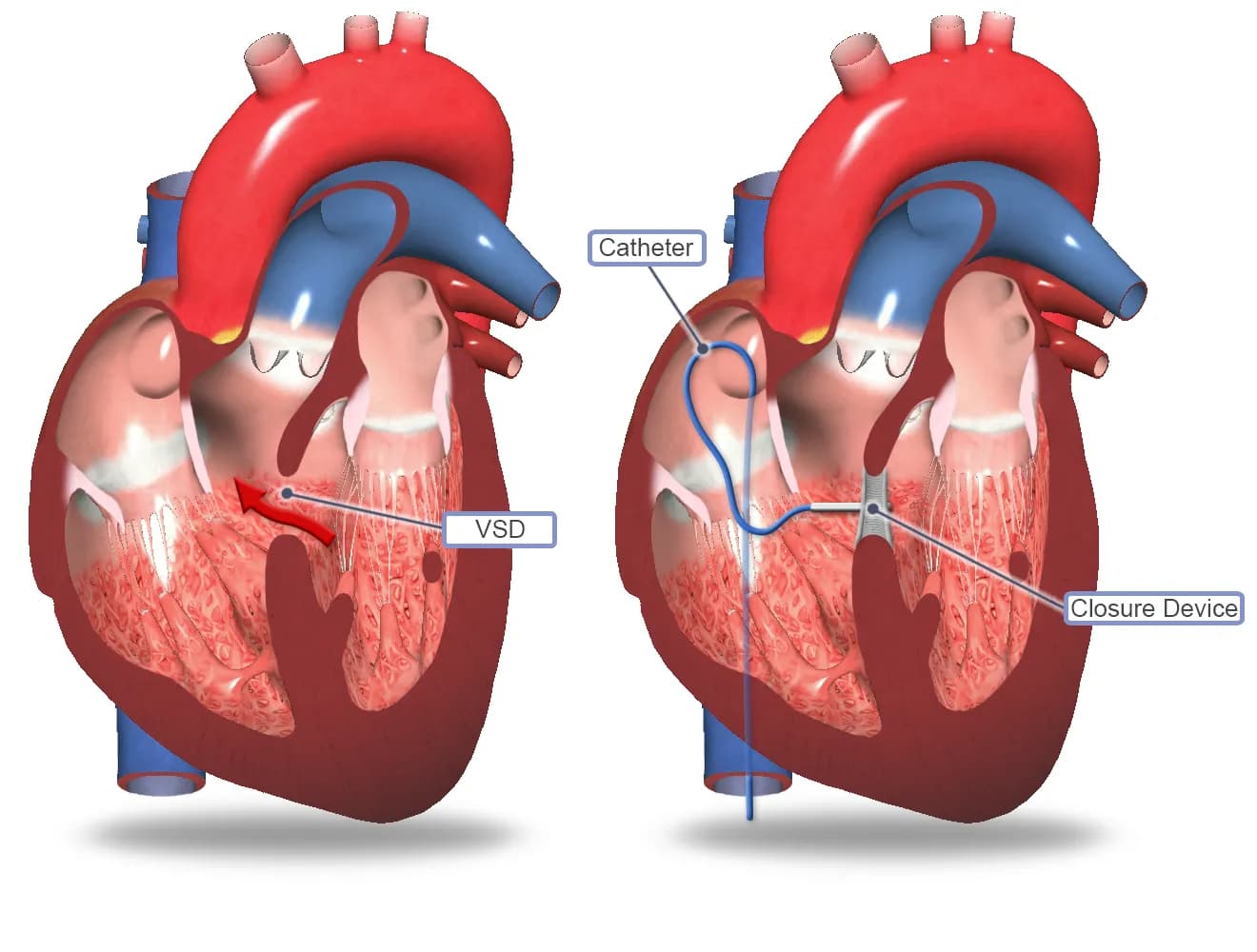
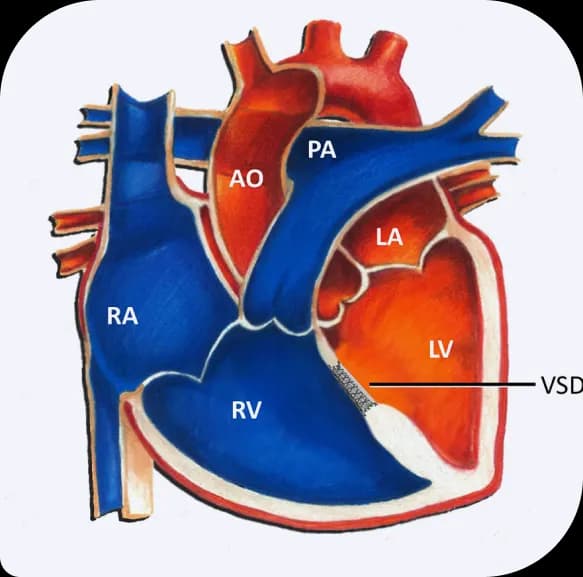
A Ventricular Septal Defect (VSD) is a hole in the wall (septum) separating the two lower chambers of the heart (ventricles). This allows oxygen-rich blood to mix with oxygen-poor blood, forcing the heart and lungs to work harder. The Ventricular Septal Defect (VSD) closure procedure is a minimally invasive or surgical method used to close this defect using a specialized device or patch. For eligible patients, Ventricular Septal Defect (VSD) Closure surgery/procedure in Mumbai offers a safe and effective way to prevent complications like heart failure, pulmonary hypertension, and poor growth in children.
How It's Done
How is Ventricular Septal Defect (VSD) Closure Done?
A small incision is made in the femoral vein or artery in the groin, based on the type and location of the Ventricular Septal Defect (VSD).
A catheter is guided to the heart using fluoroscopy and transesophageal echocardiography (TEE).
The Ventricular Septal Defect (VSD) is sized and located using real-time imaging.
A specialized Ventricular Septal Defect (VSD) closure device is placed across the defect using a controlled release technique.
After closure, the catheter is removed or the chest is closed in surgical cases.
Post-procedure care includes checking for residual shunts, valve issues, or arrhythmias, which are more common in Ventricular Septal Defect (VSD) than Atrial Septal Defect (ASD) closures.
Who it’s for?
Who Needs Ventricular Septal Defect (VSD) Closure?
Ventricular Septal Defect (VSD) closure is recommended for patients with a confirmed Ventricular Septal Defect (VSD) and any of the following:
 Moderate to large VSDs are typically over 6–10 mm in size or have a left-to-right shunt with a Qp/Qs ratio greater than 1.5:1.
- Signs of left heart enlargement or pulmonary hypertension
- Failure to thrive or poor weight gain in infants and children
- Frequent respiratory infections or breathlessness
- Risk of endocarditis (heart infection)
- Symptoms like fatigue, palpitations, or heart murmur
- Desire to avoid future complications with a one-time Ventricular Septal Defect (VSD) closure surgery procedure

 Benefits of Ventricular Septal Defect (VSD) Closure
What are the Benefits of Ventricular Septal Defect (VSD) Device Closure?

Minimally invasive
Many patients can avoid open-heart Ventricular Septal Defect (VSD) surgery with catheter-based treatment

Improved oxygen delivery
Prevents mixing of oxygenated and deoxygenated blood, ensuring better oxygen circulation

Heart protection
Reduces strain on the ventricles and risk of heart failure

Faster recovery
Shorter hospital stays and quicker return to daily activities

No chest incision in suitable cases
Device closure avoids a chest incision in suitable cases.

Stroke and infection prevention
Reduces the risk of embolism and endocarditis
Recovery
How a person recovers after VSD closure depends on the size and position of the defect and on their overall health.
About VSD
If a VSD is not closed
A large VSD that stays open can put extra load on the heart and lungs over time, and in some people it raises the pressure in the blood vessels of the lungs. The size of the hole and the symptoms decide whether closure is advised.
Procedure Timeline
Recovery & Follow-Up Timeline

Day of Procedure
Most patients are discharged within 1-3 days after the Ventricular Septal Defect (VSD) closure procedure.

1 Month
First follow-up and echocardiogram to check device or patch position.

6 Months
Continued clinical evaluation and medication review.

1 Year
Final follow-up to confirm successful healing and heart function.

Beyond 1 Year
Annual check-ups only if advised by your heart specialist in Mumbai.
What Sets us Apart
Why Choose Heart Valve Experts?

Experienced Team in Ventricular Septal Defect (VSD) Closure
Our team performs device-based Ventricular Septal Defect (VSD) closure procedures.

VSD closure at Heart Valve Experts
Our cardiology team provides both interventional and surgical solutions.

Advanced Imaging & Technology
We use the latest equipment for 3D echocardiography for accurate diagnosis and treatment.

Tailored Treatment Approach
Whether you need a device closure or an open Ventricular Septal Defect (VSD) closure surgery procedure, we personalize care based on your condition.

Comprehensive Recovery Support
From diagnosis to long-term follow-up, we guide you through every step of your healing journey.
Your Consultation
What to expect at your consultation
- What should I bring to my consultation?
- Please bring your previous reports, such as echocardiogram (echo), ECG, CT scan and angiography reports, along with discharge summaries and a list of the medicines you take.
- What happens during the consultation?
- The doctor reviews your medical history and reports, examines you and explains your heart condition. If more information is needed, further tests may be advised.
- Will I be told about all treatment options?
- Yes. The doctor discusses the options that may suit you, including medicines, catheter-based procedures and surgery, with their possible benefits and risks, so you can decide with your family.
- Can I get an opinion on my existing reports first?
- Yes. You can share your reports for a review before you visit. The doctor will tell you whether an in-person assessment is needed.
FAQs